
Stepping into an indoor simulator bay for the first time can feel both exciting and overwhelming. With immediate feedback on every shot, modern launch monitors give you the tools to make rapid progress…if you know how to structure your practice. Without a plan, it’s easy to fall into the trap of “raking and hitting” without making real mechanical improvements.
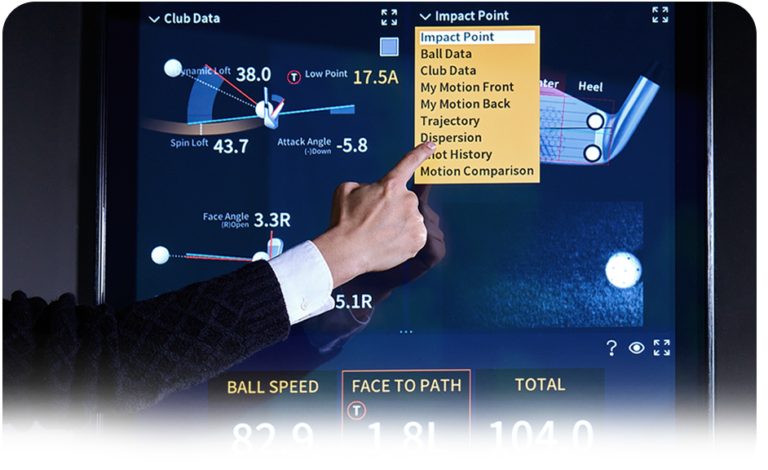
In this guide, we outline a step-by-step framework to maximize your time in the bay, structure your practice sessions with purpose, and translate indoor gains directly to the golf course.
New to launch monitor data? Before diving in, check out our companion guide on Golf Launch Monitor Numbers Explained to learn how metrics like Ball Speed, Smash Factor, and Spin Rate are calculated.
1. The 60-Minute Indoor Practice Framework
Instead of hitting 100 drivers as fast as possible, break your 60-minute session into four distinct phases:
Phase 1: Warm-Up & Mobility (10 Mins)
Start with half-swing wedges or short irons. Focus on establishing rhythm, clean contact, and dynamic body movement before building up to full speed.
Phase 2: Block / Technical Practice (20 Mins)
Isolate a single mechanical swing feel or metric (e.g., getting Face Angle closer to zero at impact). Use the RangeX dual-camera system to compare how your swing feels against what it looks like on replay.

Phase 3: Random / Target Practice (20 Mins)
Simulate on-course pressure by changing clubs and targets after every single shot. Step off the mat, complete your full pre-shot routine, alignment check, and execute.
Phase 4: Skills Challenge (10 Mins)
End your practice with a quantifiable game. Try hitting 5 fairways in a row within a 30-yard corridor or landing 3 consecutive 100-yard wedges within a 15-foot radius.
2. Essential Indoor Practice Drills
Drill A: The Wedge Yardage Matrix
Knowing your exact carry distances for short wedges (pitching wedge, gap wedge, sand wedge) eliminates guessing inside 100 yards.
- Hit 5 shots with a 1/2 swing length and record your average carry distance.
- Hit 5 shots with a 3/4 swing length and record carry distance.
- Note these numbers down on your phone to build your personal reference chart for the golf course.
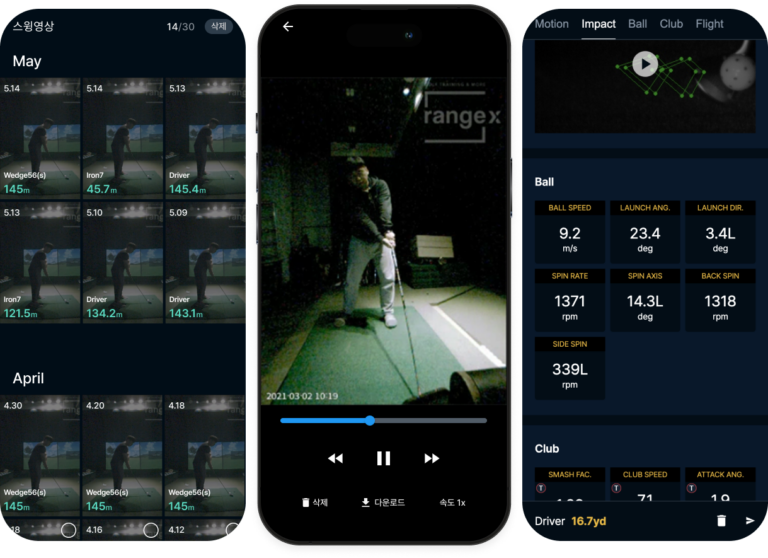
Drill B: Face Angle Start-Line Control
Since Face Angle accounts for up to 85% of your ball’s initial direction, learning to control where the face points at impact is crucial for straight shots.
- Select a mid-iron (e.g., 7-iron) on the RangeX display.
- Make 10 swings focusing solely on keeping your Face Angle between
-1.5° (closed)and+1.5° (open)relative to your target line.
3. Key Takeaways for Long-Term Progress
- Focus on Carry Distance, Not Total Distance: Outdoor roll varies dramatically depending on turf conditions, slope, and weather. Your carry number is your true distance metric.
- Quality Over Quantity: Hitting 50 intentional shots with a full pre-shot routine produces far better long-term development than hitting 150 shots in a hurry.
- Work with an Instructor: Pair your independent practice sessions with periodic lessons to verify that your technical drills align with your swing goals.